Abstract: Biosecurity screening of synthetic DNA orders is a key defense against malicious actors and careless enthusiasts producing dangerous pathogens or toxins. It is important to evaluate biosecurity screening tools for potential vulnerabilities and to work responsibly with providers to ensure that vulnerabilities can be patched before being publicly disclosed. We consider a class of potential vulnerabilities in which a DNA sequence is obfuscated by splitting it into two or more fragments within a single synthetic DNA order, where the fragments can be readily reassembled via routine biological mechanisms. To evaluate this potential vulnerability, we develop a test set of … MORE

Horizon Newsletter – September 2026
Expert witness testimony can make the difference in a case, and learning to root testimony in the science, the processes, and the data is pivotal to ensuring DNA evidence presented stands up to the pressures of a courtroom setting. 2026 … MORE

Abstract: Space biomanufacturing supports long-term missions by generating products on-site and thereby reducing costly resupply. Because the deployment cost is dominated by the mass of transported components and resources, the total mass becomes a key design driver. The total system … MORE

Abstract: The article reviews the use of the term “gain of function” (GoF) and “dangerous gain of function” (DGoF) in both the regulatory space relevant to the United States of America and the biomedical literature. Methods: We identified nearly 20,100 … MORE

Signature Science has validated a SNP mixture deconvolution workflow for two-person DNA mixtures, a breakthrough enabling new leads from evidence previously unusable. When a sample contains DNA from two contributors, our process separates the mixture to produce a single-source SNP profile for the major contributor, making it suitable for forensic investigative genetic genealogy (FIGG) analysis. The advent of this technology means that more evidence types can be considered for FIGG. Critically, depending on the mixture ratio, our workflow can be used with or without a reference sample. Unsure if your sample is a good fit? Leave it to us! We will evaluate … MORE
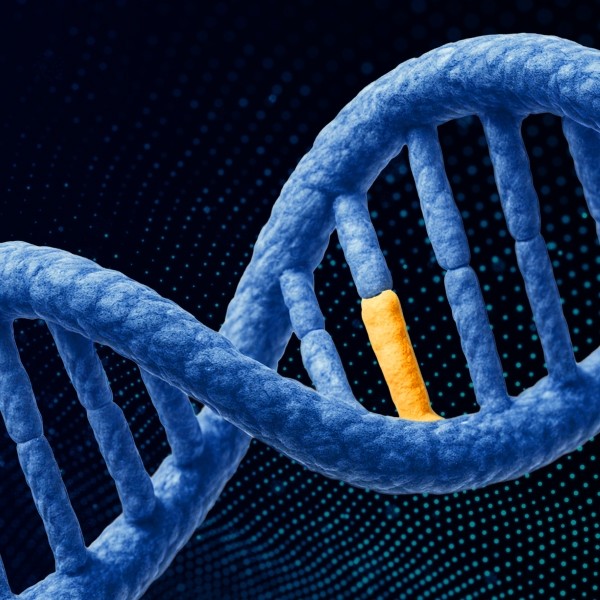
Abstract: This study evaluated the ability to produce FORensic Capture Enrichment (FORCE) genotypes using amplicon-based and capture-based enrichment assays. The FORCE panel is a standardized set of single nucleotide polymorphism (SNP) markers developed for forensic applications. Twelve DNA samples were … MORE

Signature Science Interviewed for RAND AI Safety Paper
March 16, 2026 • Last year, Signature Science AI Biosafety Lead Dr. Danielle LeSassier was interviewed as part of a multi-institutional study led by RAND into the state of Human Uplift Studies for informing AI Safety. As providers in this space, … MORE

Horizon Newsletter – February 2026
We’re gearing up for another ASCLD Symposium and are excited to be part of 2026’s packed agenda! We’re hosting two plenary talks and one deep dive session. Scroll for a preview of SigSci Forensics on the agenda. Dates & Times TBA! View … MORE

Abstract: Accurate assessment of low-dose neutron radiation exposure remains a central challenge in biodosimetry, particularly for applications requiring non-invasive sample types such as skin. Here, we characterized the transcriptional response of a three-dimensional in vitro human skin model (EpiDermFT) to neutron irradiation at … MORE

Dr. Ben H. Thacker Joins Signature Science’s Managers Committee
Thacker serves as Chief Operating Officer of Southwest Research Institute. AUSTIN, TX – February 10, 2026 – Signature Science, LLC is pleased to announce the addition of Dr. Ben H. Thacker, P.E. to its Managers Committee following his appointment as Southwest … MORE

Abstract: Introduction: Nucleic acid synthesis is a dual-use technology that can benefit fields such as biology, medicine, and information storage. However, synthetic nucleic acids could also potentially be used negligently and ultimately cause harm, or be used with malicious intent to cause … MORE